About the ASAP Collaborative Research Network (CRN)
The Collaborative Research Network (CRN) is the first of its kind to foster an environment that facilitates the rapid and free exchange of scientific ideas to spark new discoveries for Parkinson’s disease (PD). Our program utilizes open science principles to improve outcomes, foster collaboration, generate resources, and share data assets for accelerating the pace of discovery within a global research network.

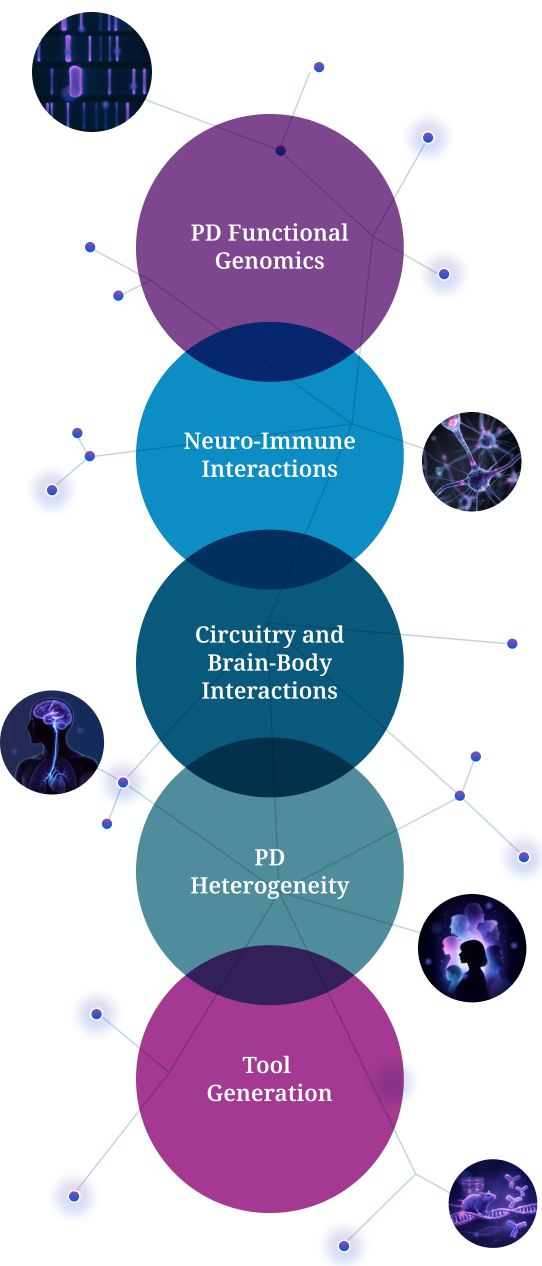
Our Approach Centers On:

Encouraging diverse perspectives and open discourse to support high-risk, ambitious projects, reshaping how science in the Parkinson’s field is conducted.

Reinvigorating the research pipeline to identify new targets and pathways for translational studies and commercialization.

multidisciplinary, international teams
investigators
countries
institutions
An ASAP Program
A Program of ASAP
The CRN is a program of the Aligning Science Across Parkinson’s initiative. ASAP is managed by the Coalition for Aligning Science (CAS) and works collaboratively with The Michael J. Fox Foundation for Parkinson’s Research (MJFF) to implement its programs, including the CRN. ASAP is part of the CNS Quest, which is a program of the Sergey Brin Family Foundation and Catalyst4.
The CRN operates through a centralized model that includes program management, scientific coordination, and community engagement—all designed to streamline operations, ensure compliance with open science principles, and enable seamless collaboration across its international network of investigators.
Explore the CRN
Explore the CRN
We are structured around the principles of collaboration, creativity, flexibility, and transparency, bringing together multidisciplinary teams to tackle high-priority PD research questions through shared goals and open science. Through our open science policy, the network ensures that discoveries are rapidly disseminated and broadly accessible to the scientific community.
Explore the Research Community →
Learn About Impact →

More Highlights
Learn more about how our research network is making strides in the Parkinson’s research community.
MoMa Awardees Tackle Meta-Analysis of CRN Omics Data
Guided by our open science approach, ASAP launched the Multi-Omics Meta-Analysis (MoMa) funding opportunity to support Collaborative Research Network (CRN) researchers interested in conducting meta-analysis of omics data housed within our publicly accessible database, the CRN Cloud.
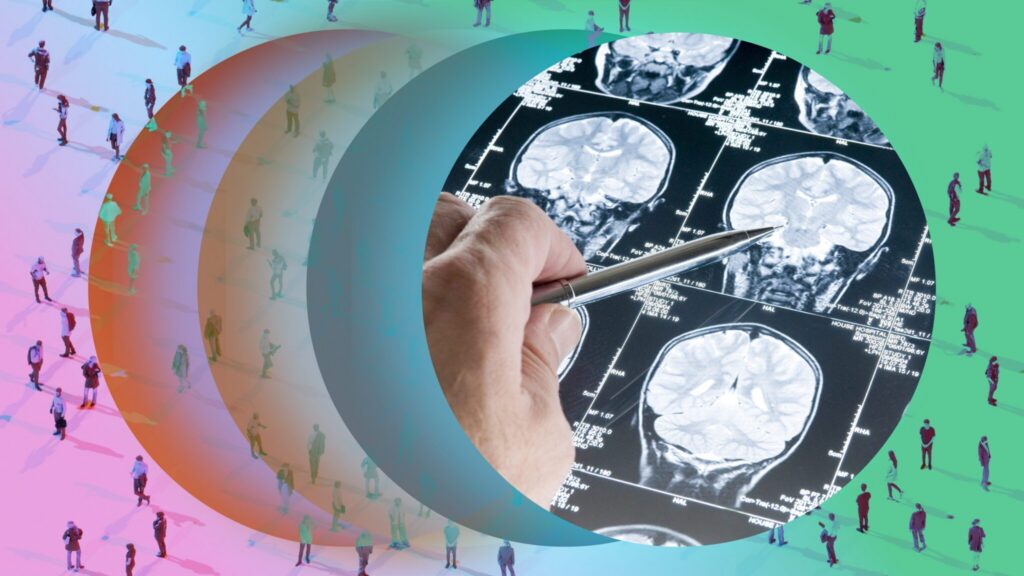
Genetic Representation in Parkinson’s Research Drives Progress
GP2 is overcoming the historical limitation of Parkinson’s genetic research — a focus on European populations only — by genotyping 250,000 volunteers globally. Learn how this approach to broaden genetic representation in Parkinson’s research paves the way to precision treatment and a better understanding of the disease.
Decoding the Blueprint: Advancing Personalized Parkinson’s Treatments
In our community, we often hear: “If you’ve met one person with Parkinson’s, you’ve met one person with Parkinson’s.” This isn’t just an adage — it’s a biological reality. This radical variability is exactly what makes the disease so difficult to outsmart. We’ve learned that a puzzle this fragmented cannot be solved with a single, broad stroke. Our goal isn’t to find one answer for everyone, but the right answer for the right person at the right time.